
Article Summary
- Proteins are long chains of amino acids with multiple biological functions.
- Peptides are short chains of amino acids with more targeted effects.
- Amino acid sequences are created based on instructions in your DNA.
Proteins and Peptides Have The Same Building Blocks But Different Roles
Amino acids are the basic building blocks of life.
They’re the raw materials your body uses to build structures, enzymes, hormones, and signaling molecules.
Proteins are long chains of amino acids.
Because of their length, they fold into complex three-dimensional shapes.
Those complex shapes allow proteins to perform heavy-duty tasks in the body, such as:
- Building muscle and tissue
- Acting as enzymes to drive chemical reactions
- Supporting immune function
- Transporting molecules throughout the body
Most people are already familiar with proteins and their role in health.
Peptides, on the other hand, are short chains of amino acids.
They don’t fold into large, complex 3D structures like proteins do.
Instead, peptides are smaller, simpler, and more targeted in what they do.
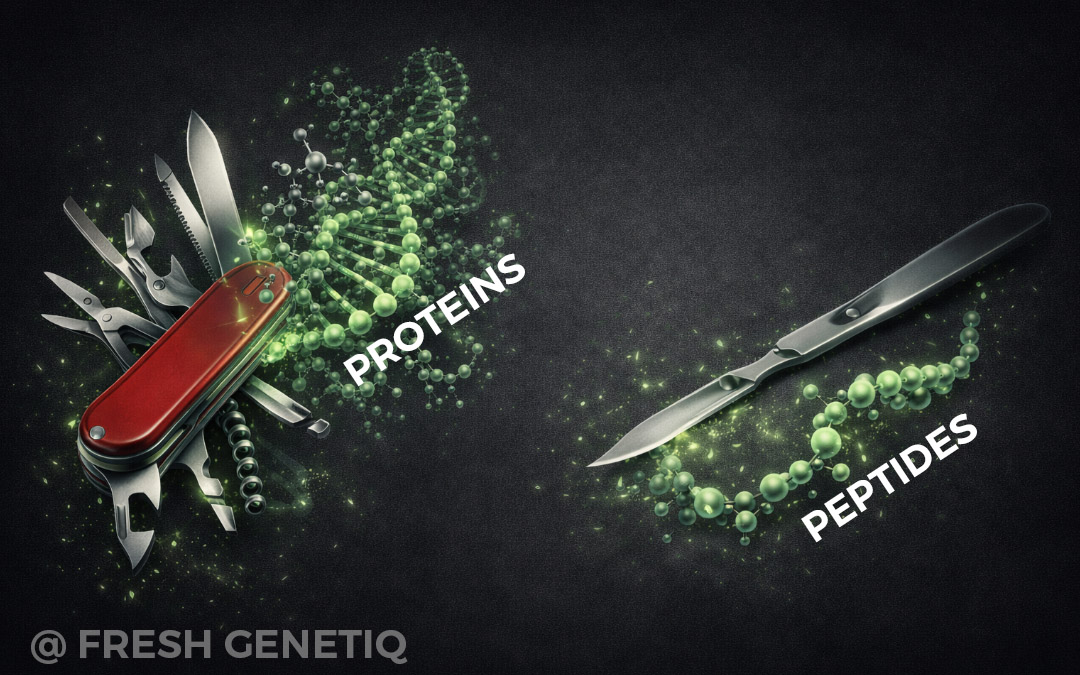
Think of proteins as Swiss Army knives with many functions.
Peptides are more like scalpels designed for a single, precise incision.
Why Peptides Are More Targeted
Because peptides are shorter chains of amino acids, they tend to have very specific functions.
Rather than performing many roles at once, peptides often act as:
- Signaling molecules
- Messengers between cells
- Regulators of specific biological processes
Their smaller size and focused structure allow them to interact with the body in more precise ways.
This is why peptides are often discussed separately from proteins, even though they’re built from the same raw materials.
Where DNA Fits Into All of This
This is where things get interesting.
Everything starts with your raw DNA.
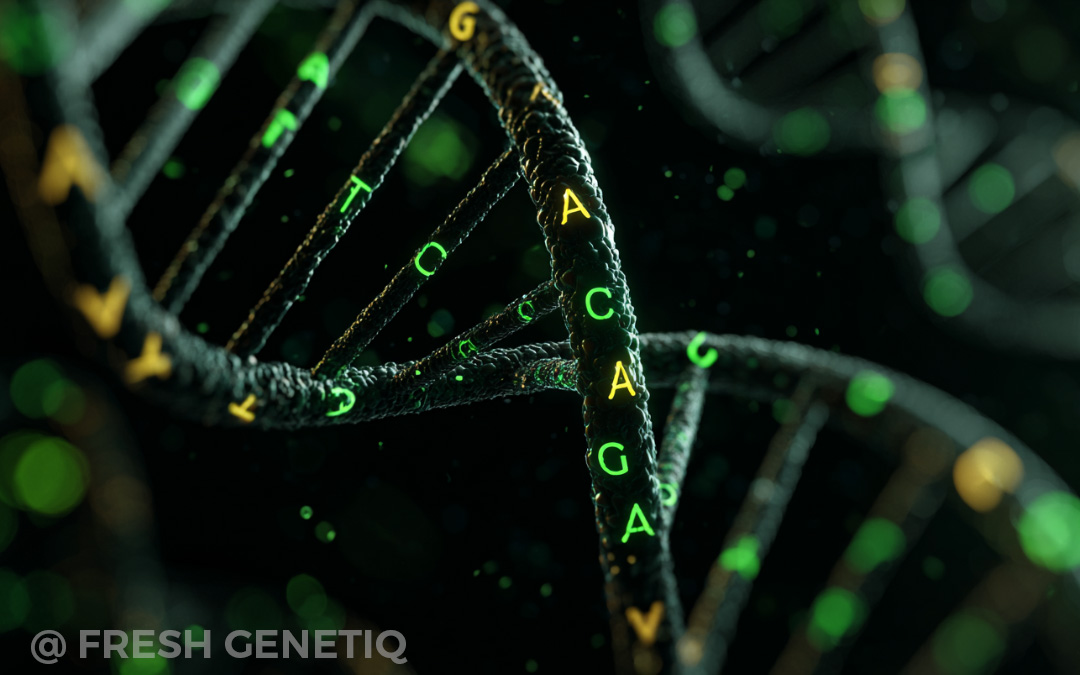
Your DNA is written using just four letters:
A, T, C, and G.
While everyone has the same four letters, the sequence of those letters is unique to you.
Your body reads DNA three letters at a time.
Each three-letter sequence is called a codon.
Each codon corresponds to a specific amino acid.
There are only 20 possible amino acids, but the order they’re arranged in — and how many are linked together — determines whether your body produces a peptide or a protein.
From DNA Code to Peptides
When amino acids are linked together in a short, highly specific sequence, the result is a peptide.
That sequence is not random. It is dictated by genetic instructions that tell the body exactly which amino acids to assemble, in what order, and at what length.
For example, a specific DNA sequence codes for a chain of 15 amino acids known as BPC-157. That exact sequence — not just the ingredients themselves — is what defines the peptide.
If even one amino acid is removed, added, or rearranged, the peptide is no longer the same. Its signaling behavior changes, because biological systems respond to structure and order, not just raw materials.
BPC-157 is a signaling peptide derived from a naturally occurring protein found in the digestive system. Its existence illustrates a larger principle: peptides are not substances chosen at random — they are encoded outcomes of genetic instructions.
This is the key point.
A peptide is not the starting point.
DNA is.
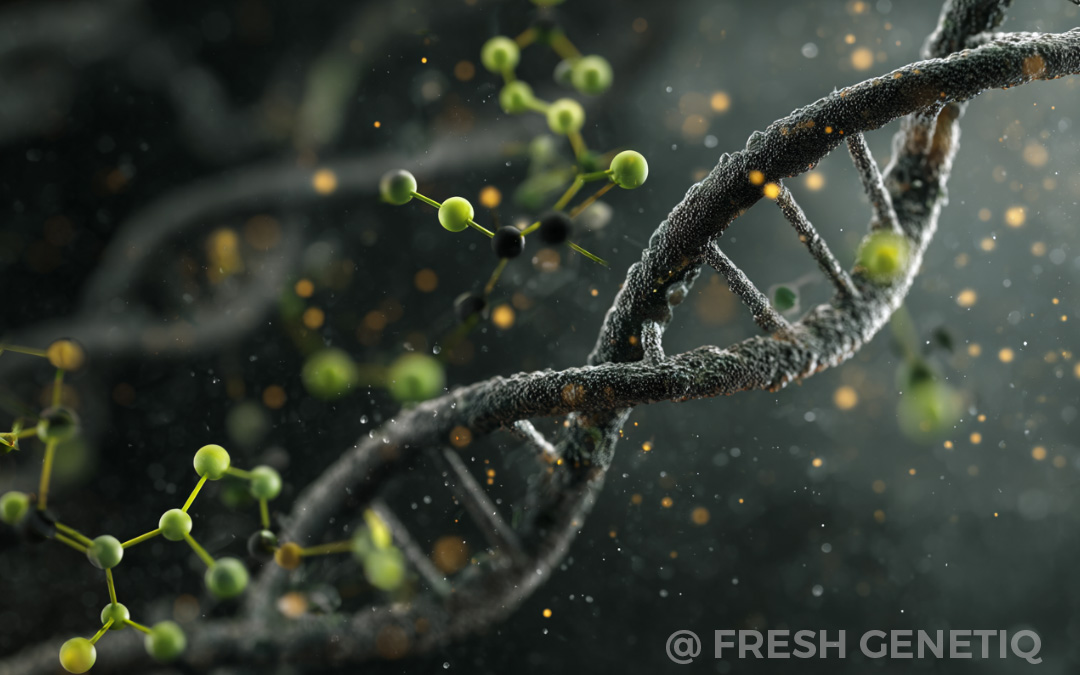
Proteins, Peptides, and The Importance of Raw DNA Data
Whether the body is producing large proteins or small peptides, the instructions always come from the same place.
Understanding your DNA doesn’t mean manipulating biology or making predictions.
It means understanding the instruction set your body uses to build and regulate itself.
Proteins.
Peptides.
Enzymes.
Signals.
All of it starts with the genetic code.
That’s why raw DNA data is foundational.
It provides the context behind how your body builds, signals, and functions at the most basic level.
The Big Picture
Proteins and peptides aren’t opposites.
They’re part of the same system.
Same building blocks.
Different lengths.
Different structures.
Different functions.
And behind all of it is your DNA — quietly running the code that makes everything possible.
Related Articles

Medicine Is Shifting From Science to Engineering by Raw DNA Data
For most of human history, medicine has followed the scientific method.
A patient presents symptoms.
A clinician forms a hypothesis.
A treatment is tested.
Weeks pass.
Results are evaluated.
Adjustments are made.
This approach has saved lives, but it is also inherently slow, reactive, and based on trial and error.
Today, for the first time in history, medicine is beginning to change.
It’s moving away from pure experimentation — and toward engineering.
That shift has major implications for preventive health, mental health, and how we make decisions before problems escalate.
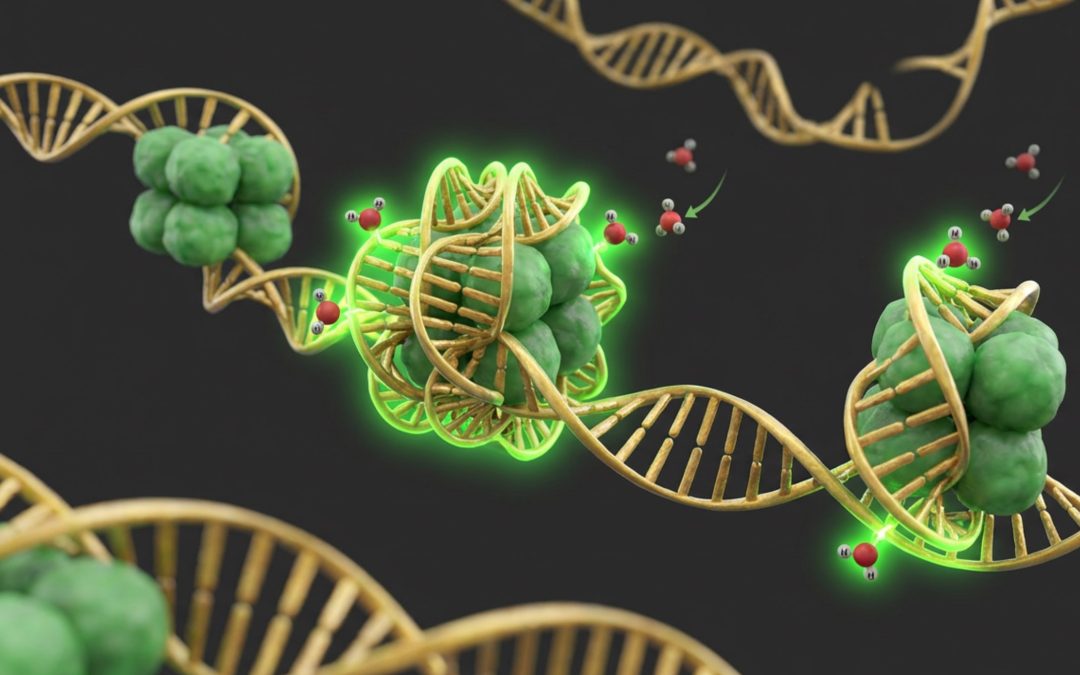
If You Understand Methylation, You Understand Genetics
You’ve probably heard the phrase, “Genetic methylation turns genes on and off.”
It sounds important — but it’s rarely explained in a way that actually makes sense.
So let’s simplify what methylation really is, why it matters, and why understanding it gives you a much clearer picture of how your genetics actually function in real life.
DNA Testing Isn’t About Your Past — It’s the Blueprint for Your Future
When most people hear DNA testing, they immediately think of ancestry.
Questions like “Where am I from?” or “Am I 2% Neanderthal?” tend to dominate the conversation.
But that’s a very limited view of what genetics actually offers.
Modern genetic testing isn’t about your past.
It’s about understanding the biological foundation that shapes your future.
Your DNA is the instruction manual your body has been following since birth — and learning how to read it properly can change how you approach nutrition, lifestyle, recovery, and long-term health decisions.