
Article Summary
- Methylation is the transfer of a small chemical group that helps regulate how genes are expressed.
- The “MT” in genes like MTHFR, MTR, COMT, and PEMT refers to methyl transfer.
- Methylation influences how tightly DNA is wrapped around histones, affecting gene accessibility.
- Only about 60 genes directly control methylation, but they impact mental health, hormones, detoxification, and energy.
- Methylation is less about what your DNA codes and more about how those genes perform.
What Methylation Actually Means
At its core, methylation is a transfer process.
Specifically, it’s the transfer of a methyl group — a tiny chemical unit made up of one carbon atom bonded to three hydrogen atoms.
This process is often referred to as single-carbon metabolism.
Different name, same concept.
That single transfer may seem insignificant, but it plays a massive role in how your DNA behaves.
Why So Many Genes Start With or End in “MT”
You may notice that many important genes related to methylation share a similar naming pattern:
MTHFR
MTR
COMT
PEMT
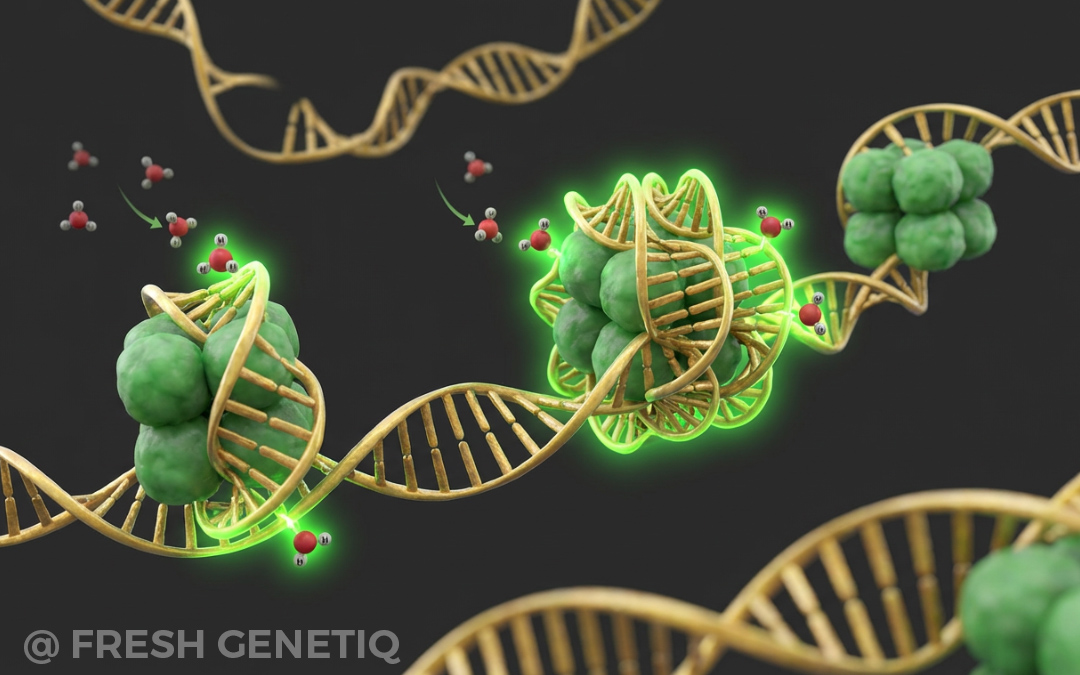
The “MT” in these gene names refers to methyl transfer.
These genes are involved in moving methyl groups through the body and placing them where they’re needed.
The “MT” in these genes is not a coincidence — it’s their job description.
How Methylation Turns Genes “On” or “Off”
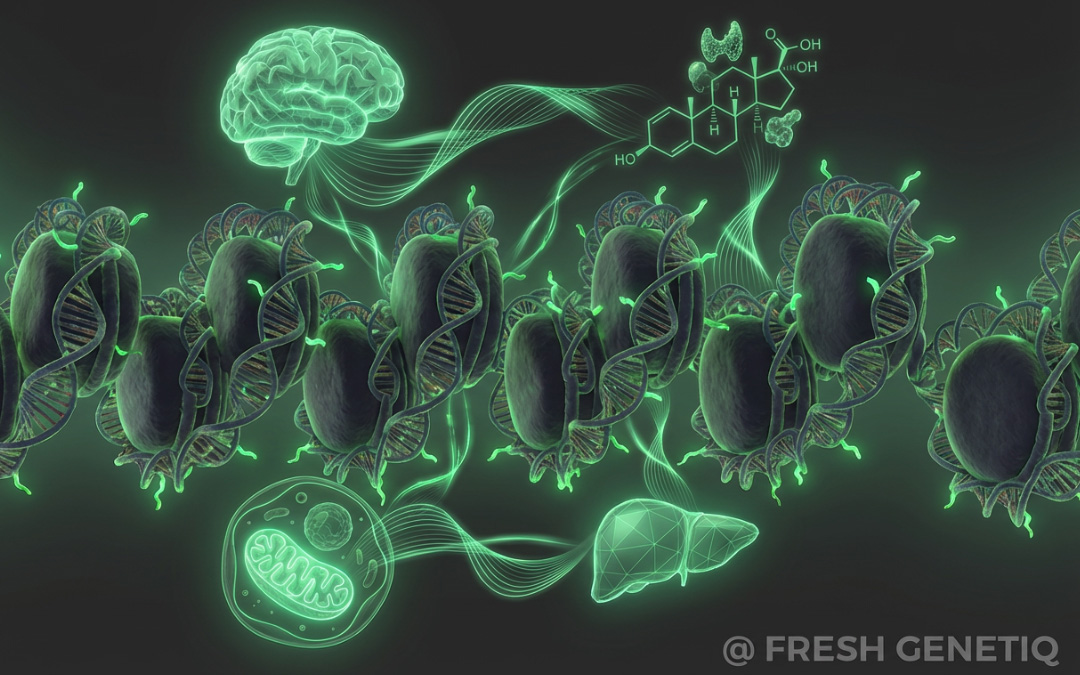
DNA isn’t just a static string of code.
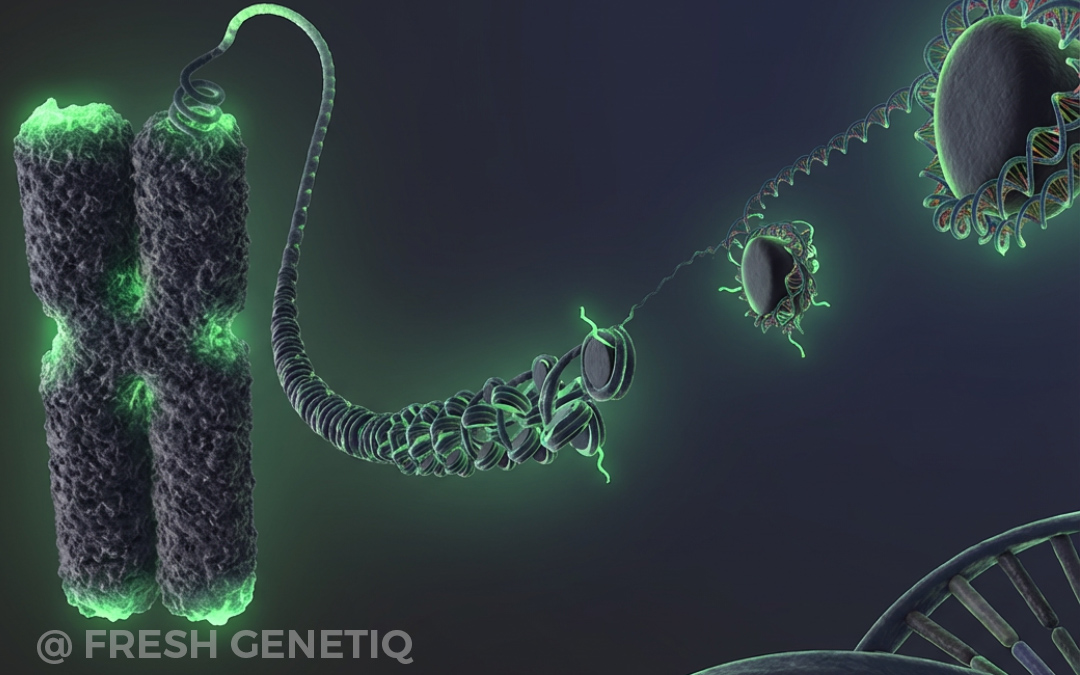
It’s wrapped around structural proteins called histones.
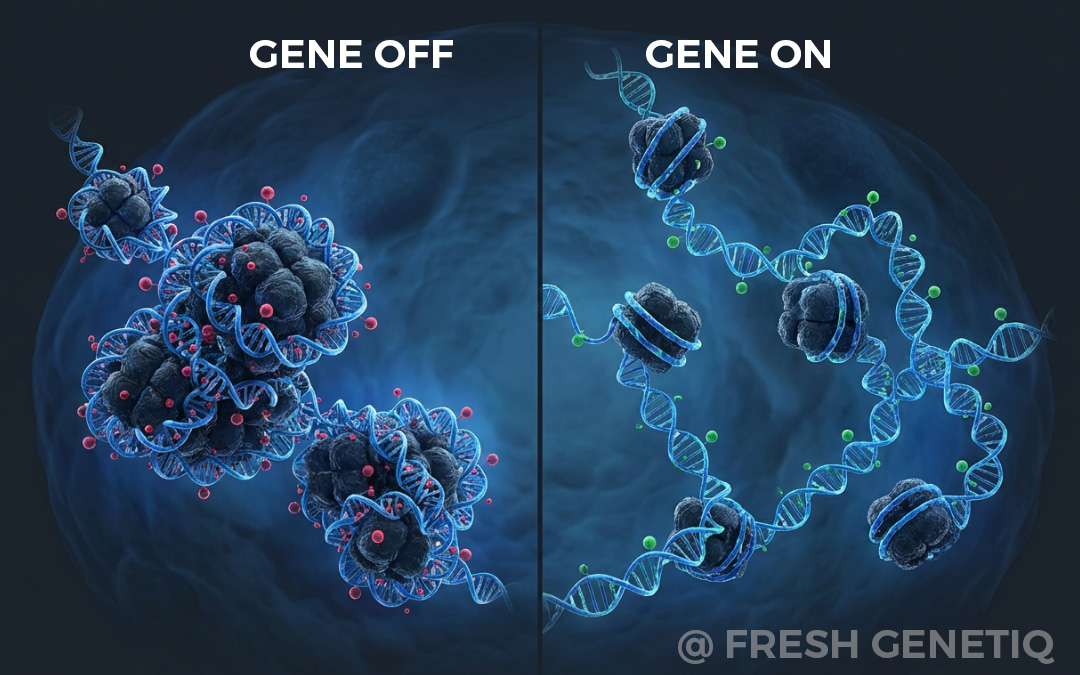
When DNA is tightly wrapped around histones, it’s harder for the body to read that section of the code.
When it’s more loosely wrapped, the code is easier to access.
Methylation influences this wrapping process.
That tiny methyl group transfer can determine whether a stretch of DNA is:
- More tightly packed (turned off)
- Or more loosely packed (turned on)
This is what people mean when they say methylation “turns genes on or off.”
It’s not flipping a switch — it’s changing how accessible the code is.
Why a Small Number of Genes Have a Huge Impact
Humans only have around 60 genes that directly function within methylation pathways.
That’s a small number.
But their influence is enormous.
Methylation pathways play a role in:
- Mental health and neurotransmitter balance
- Hormone signaling
- Liver detoxification
- Energy production
- Cellular repair and regulation
Because methylation sits upstream of so many systems, small inefficiencies can ripple outward into many areas of health and performance.
Why Methylation Is About Performance, Not Just Code
This is where genetics often gets misunderstood.
It’s not just about what your raw DNA codes say.
It’s about how well those genes perform.
Two people can have similar genetic variants on paper, but very different real-world outcomes depending on how efficiently their methylation pathways function.
That’s why methylation matters.
It’s the difference between owning a blueprint — and understanding how the machinery actually runs.
The Big Picture
Methylation is one of the clearest examples of how genetics becomes function.
A tiny chemical transfer influences gene accessibility.
Gene accessibility influences biological pathways.
And those pathways influence nearly everything about how your body operates.
If you understand methylation, you don’t just understand genetics —
you understand how genetic information becomes real-world biology.
Related Articles
Medicine Is Shifting From Science to Engineering by Raw DNA Data
For most of human history, medicine has followed the scientific method.
A patient presents symptoms.
A clinician forms a hypothesis.
A treatment is tested.
Weeks pass.
Results are evaluated.
Adjustments are made.
This approach has saved lives, but it is also inherently slow, reactive, and based on trial and error.
Today, for the first time in history, medicine is beginning to change.
It’s moving away from pure experimentation — and toward engineering.
That shift has major implications for preventive health, mental health, and how we make decisions before problems escalate.

Proteins vs Peptides: How DNA Explains the Difference
Most people assume proteins and peptides are basically the same thing.
And in a way, they are.
Both proteins and peptides are made from amino acids.
But the difference between them — and why that difference matters — comes down to structure, size, and function.
More importantly, both proteins and peptides start from the same place: your DNA.
DNA Testing Isn’t About Your Past — It’s the Blueprint for Your Future
When most people hear DNA testing, they immediately think of ancestry.
Questions like “Where am I from?” or “Am I 2% Neanderthal?” tend to dominate the conversation.
But that’s a very limited view of what genetics actually offers.
Modern genetic testing isn’t about your past.
It’s about understanding the biological foundation that shapes your future.
Your DNA is the instruction manual your body has been following since birth — and learning how to read it properly can change how you approach nutrition, lifestyle, recovery, and long-term health decisions.