
Article Summary
- Mitochondrial DNA is separate from nuclear DNA and is inherited only from your mother.
- While often used to trace ancestry, mitochondrial DNA is more important for understanding cellular energy production.
- Mitochondria help convert nutrients into usable energy for your cells.
- Genetic variation in mitochondrial DNA can influence how efficiently your body produces energy and adapts to stress.
- Functional DNA analysis focuses on how your biology works today and in the future, not just where you came from.
What Makes Mitochondrial DNA Different
Mitochondrial DNA is separate from your nuclear DNA.
While nuclear DNA contains genes inherited from both parents, mitochondrial DNA is inherited only from your mother.
This is why scientists often use mitochondrial DNA to trace maternal ancestry.
But ancestry is only a small part of the story.
The more important question is not where mitochondrial DNA comes from — but what it does.
Why Mitochondrial DNA Is About Function, Not Just Ancestry
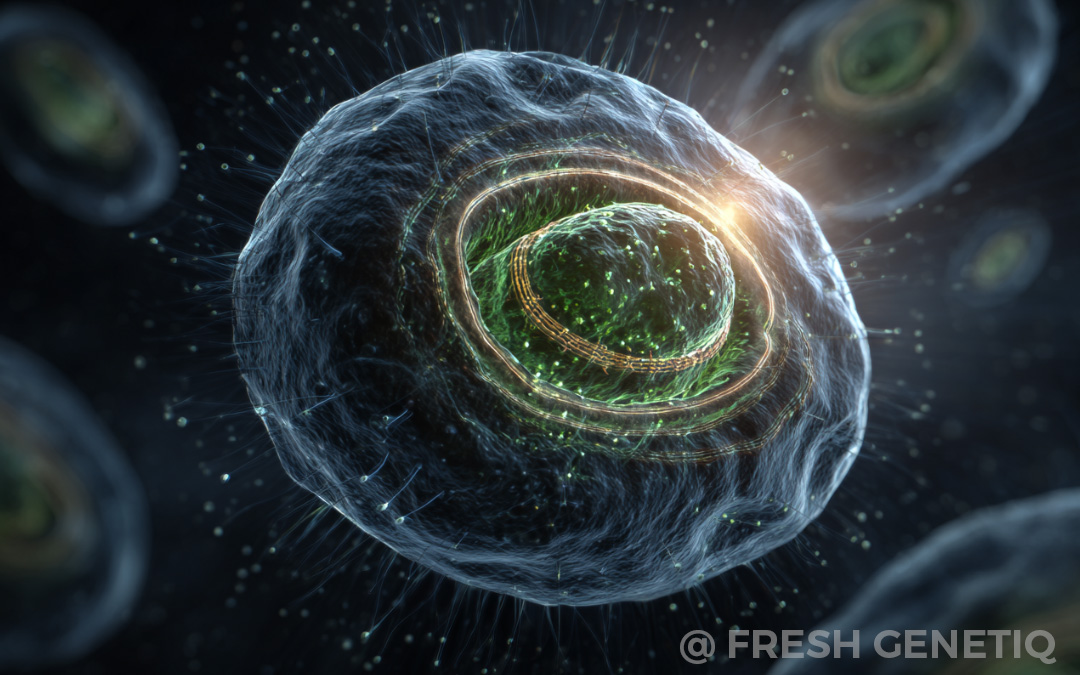
Mitochondria are often described as the powerhouse of your cells.
Their primary role is to help convert nutrients into usable cellular energy.
Mitochondrial DNA contains instructions that influence how efficiently this process happens.
That means mitochondrial DNA plays a role in:
- How well your cells produce energy
- How resilient your body is under stress
- How efficiently tissues recover and repair
- How your body responds to physical and mental demands
From a functional perspective, mitochondrial DNA is not about family history.
It’s about performance.
How Mitochondrial DNA Influences Energy at the Cellular Level
Every cell in your body relies on mitochondria to function.
If energy production is inefficient at the cellular level, the effects can ripple outward — influencing how you feel, perform, and recover.
Looking at mitochondrial DNA helps provide insight into:
- Cellular energy efficiency
- Potential bottlenecks in energy production pathways
- How genetic variation may influence overall metabolic resilience
This doesn’t diagnose disease or predict outcomes.
Context helps explain why two people with similar lifestyles can experience very different energy levels and stress tolerance.
Why We Focus on Function Over Lineage
Mitochondrial DNA is often discussed in the context of ancestry and lineage.
That information can be interesting.
But at FRESH GENETIQ, the focus is on how your biology functions in real life.
Not centuries ago.
Not on a family tree.
But today — and in the future.
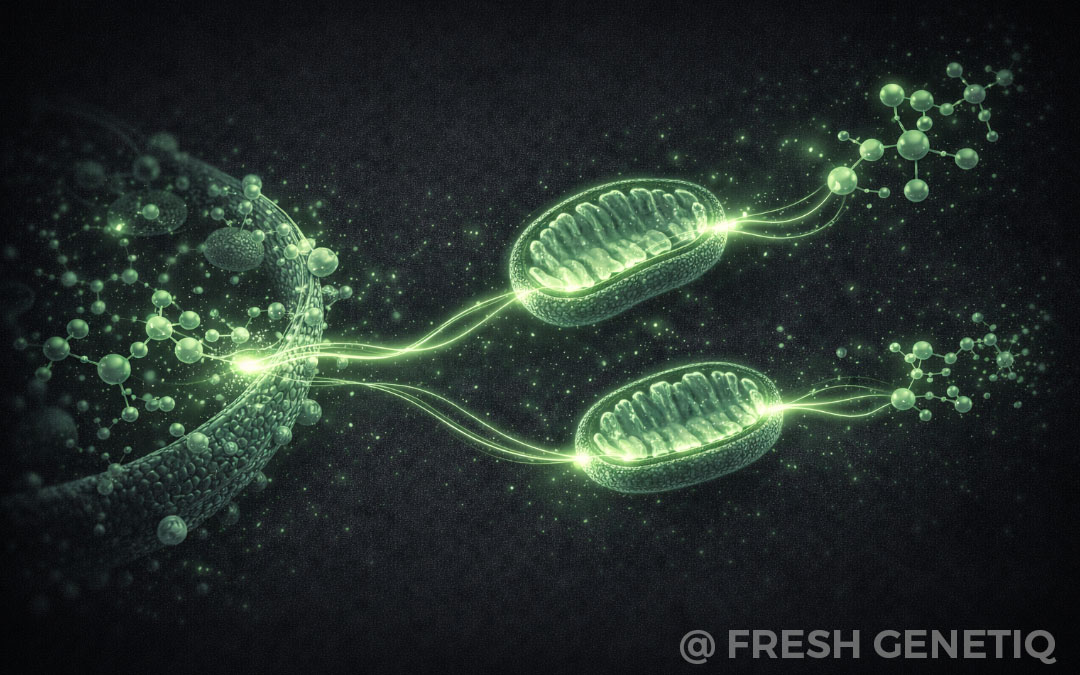
We look at mitochondrial DNA as part of a broader effort to understand how your body creates energy, adapts to stress, and supports long-term health decisions.
The Big Picture
Mitochondrial DNA is unique.
It’s inherited differently.
It functions differently.
And it plays a foundational role in cellular energy.
Understanding it isn’t about tracing where you came from.
It’s about understanding how your body works — and using that insight to make more informed decisions moving forward.
Related Articles

Medicine Is Shifting From Science to Engineering by Raw DNA Data
For most of human history, medicine has followed the scientific method.
A patient presents symptoms.
A clinician forms a hypothesis.
A treatment is tested.
Weeks pass.
Results are evaluated.
Adjustments are made.
This approach has saved lives, but it is also inherently slow, reactive, and based on trial and error.
Today, for the first time in history, medicine is beginning to change.
It’s moving away from pure experimentation — and toward engineering.
That shift has major implications for preventive health, mental health, and how we make decisions before problems escalate.
If You Understand Methylation, You Understand Genetics
You’ve probably heard the phrase, “Genetic methylation turns genes on and off.”
It sounds important — but it’s rarely explained in a way that actually makes sense.
So let’s simplify what methylation really is, why it matters, and why understanding it gives you a much clearer picture of how your genetics actually function in real life.

Proteins vs Peptides: How DNA Explains the Difference
Most people assume proteins and peptides are basically the same thing.
And in a way, they are.
Both proteins and peptides are made from amino acids.
But the difference between them — and why that difference matters — comes down to structure, size, and function.
More importantly, both proteins and peptides start from the same place: your DNA.